Begum Ra'ana Liaquat Ali Khan
Almora to Delhi - Reinventing a Life
Begum Ra'ana Liaquat Ali Khan was not born Ra'ana at all. She was born Irene Ruth Margaret Pant in 1905, into a Christian family of Brahmin origin in the hill town of Almora, and later studied economics at the University of Lucknow. While teaching at a women's college in Delhi, she met the future statesman Liaquat Ali Khan.
Their marriage required a profound personal decision: Irene converted to Islam, taking the name Gul-i-Ra'ana. The choice reshaped her life, placing her at the centre of the political struggles that would soon create Pakistan. It also marked the beginning of a life lived across boundaries of religion, culture, and nation.
Karachi, 1947 - Women Build the New State
When the Partition of India triggered one of the largest migrations in modern history, Karachi and other cities were overwhelmed with refugees. Ra'ana responded by calling on women across the country to step into public life.
In 1949 she helped found the All Pakistan Women's Association, mobilising volunteers to distribute food, organise medical care, train nurses, and establish shelters for displaced families. She also created the Pakistan Women's National Guard and the Women's Naval Reserve, initiatives that challenged the idea that women should remain confined to the home.
For Ra'ana, the survival of the new nation required women's labour, leadership, and courage.
After Assassination - A Life in Public Service
In 1951, the assassination of Liaquat Ali Khan left Ra'ana widowed with two young sons in a fragile new state. Instead of withdrawing from public life, she expanded her role within it.
Over the following decades she served Pakistan as a diplomat, representing the country abroad and later becoming the first woman governor of Sindh in 1973. Her career embodied a simple but radical claim: that women belonged not only in the private sphere, but at the centre of political and institutional life.
Ra'ana often spoke about the importance of women's independence, once remarking that "no girl should get married until she has a profession."
Begum Ra'ana Liaquat Ali Khan
Stateswoman · 1 recording
1964 Speech
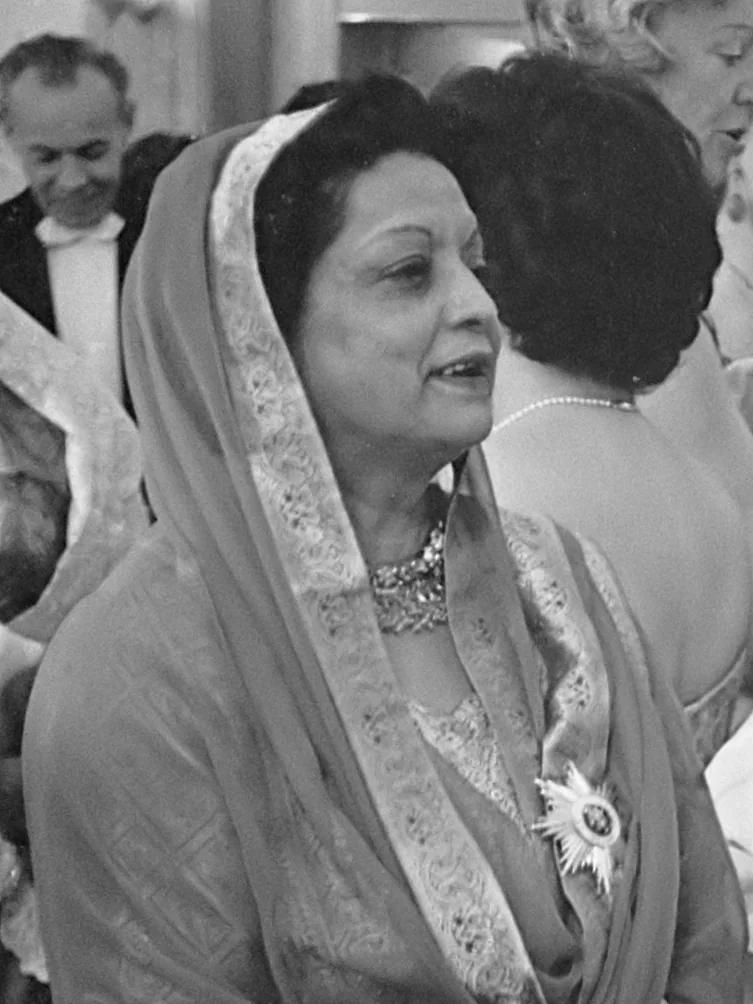
Begum Ra'ana Liaquat Ali Khan
Begum Ra'ana Liaquat Ali Khan was not born Ra'ana at all. She was born Irene Ruth Margaret Pant in 1905, into a Christian family of Brahmin origin in the hill town of Almora, and later studied economics at the University of Lucknow. While teaching at a women's college in Delhi, she met the future statesman Liaquat Ali Khan.
Their marriage required a profound personal decision: Irene converted to Islam, taking the name Gul-i-Ra'ana. The choice reshaped her life, placing her at the centre of the political struggles that would soon create Pakistan. It also marked the beginning of a life lived across boundaries of religion, culture, and nation.
When the Partition of India triggered one of the largest migrations in modern history, Karachi and other cities were overwhelmed with refugees. Ra'ana responded by calling on women across the country to step into public life.
In 1949 she helped found the All Pakistan Women's Association, mobilising volunteers to distribute food, organise medical care, train nurses, and establish shelters for displaced families. She also created the Pakistan Women's National Guard and the Women's Naval Reserve, initiatives that challenged the idea that women should remain confined to the home.
For Ra'ana, the survival of the new nation required women's labour, leadership, and courage.
In 1951, the assassination of Liaquat Ali Khan left Ra'ana widowed with two young sons in a fragile new state. Instead of withdrawing from public life, she expanded her role within it.
Over the following decades she served Pakistan as a diplomat, representing the country abroad and later becoming the first woman governor of Sindh in 1973. Her career embodied a simple but radical claim: that women belonged not only in the private sphere, but at the centre of political and institutional life.
Ra'ana often spoke about the importance of women's independence, once remarking that "no girl should get married until she has a profession."