Faiz Ahmed Faiz
Resistance in Confinement
Born in Sialkot in 1911, Faiz Ahmad Faiz stands as one of South Asia's most resonant voices. A poet of resistance and of the people, his vision of Pakistan was inseparable from a broader commitment to justice, humanity, and solidarity across borders. Deeply informed by Marxist ideals, Faiz joined the Progressive Writers' Movement in 1936 and spent much of his life confronting oppression, even when it meant prison or exile.
In 1951, he was arrested in the famous Rawalpindi Conspiracy Case and spent four years in jails across Pakistan, often in solitary confinement. With no access to pen or paper, Faiz relied on his memory to compose poems, and, where possible, traced verses onto prison walls with coal. From these years of confinement came some of his most enduring poetry. In one poem he writes:
Mataa'-e-lauh-o-qalam chhin gayī to kyā gham hai
Ke khoon-e-dil mein dubo lī haiṅ ungliyāṅ maine
Zabān pe mohar lagī hai to kyā
My pen and tablet, all that I had, taken away from me. But what is there to grieve for? For I have dipped my fingers in my heart's blood. So what if my lips have been sealed shut?
Exile and International Solidarity
Faiz's commitment was profoundly internationalist. He exchanged letters with Turkish revolutionary poet Nâzım Hikmet and maintained a close friendship with Pablo Neruda. In Pakistan, he used his editorship of the Pakistan Times to champion progressive causes. After General Zia's 1977 coup, he went into self-imposed exile in Beirut, where he edited Lotus, the Afro-Asian Writers' Association journal. Embedded in both local and global networks of anti-colonial and anti-imperialist struggle, he understood the fight for justice in Pakistan as necessarily forming part of broader movements for freedom across continents.
To listen to Faiz today, in our own fraught moment, is urgent and inspiring. As he performs his poems, he shows us that poetry can be both intimate and revolutionary, capturing both personal longing and collective struggle. Famously, he calls out:
Bol ke lab āzād haiṅ tere
Bol zubān ab tak terī hai
Speak, for your lips are free; speak, your tongue is still yours.
Faiz Ahmed Faiz
Poet · 5 recordings
Falasteeni bacche ke liye lori
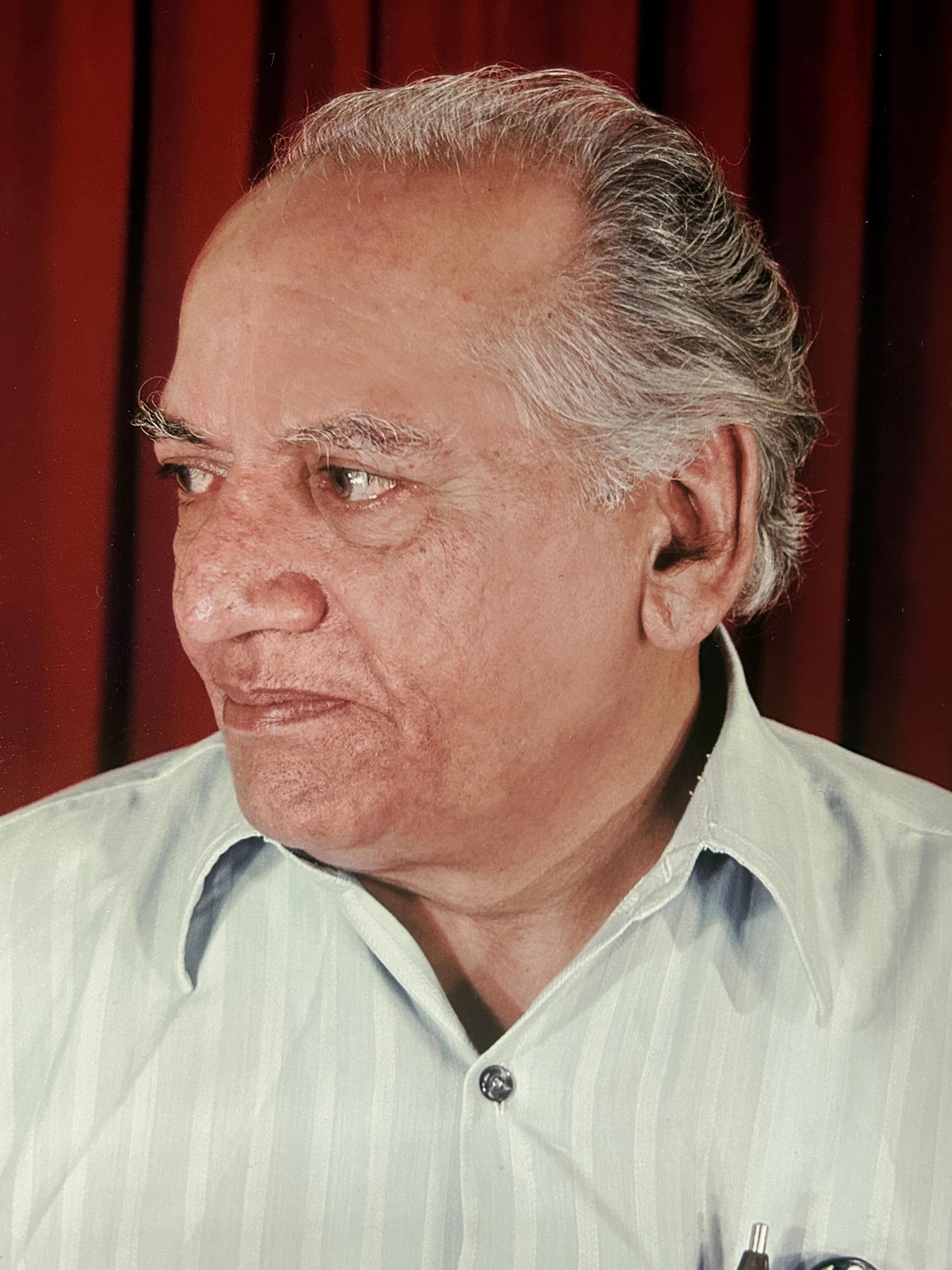
Faiz Ahmed Faiz
Born in Sialkot in 1911, Faiz Ahmad Faiz stands as one of South Asia's most resonant voices. A poet of resistance and of the people, his vision of Pakistan was inseparable from a broader commitment to justice, humanity, and solidarity across borders. Deeply informed by Marxist ideals, Faiz joined the Progressive Writers' Movement in 1936 and spent much of his life confronting oppression, even when it meant prison or exile.
In 1951, he was arrested in the famous Rawalpindi Conspiracy Case and spent four years in jails across Pakistan, often in solitary confinement. With no access to pen or paper, Faiz relied on his memory to compose poems, and, where possible, traced verses onto prison walls with coal. From these years of confinement came some of his most enduring poetry. In one poem he writes:
Mataa'-e-lauh-o-qalam chhin gayī to kyā gham hai
Ke khoon-e-dil mein dubo lī haiṅ ungliyāṅ maine
Zabān pe mohar lagī hai to kyā
My pen and tablet, all that I had, taken away from me. But what is there to grieve for? For I have dipped my fingers in my heart's blood. So what if my lips have been sealed shut?
Faiz's commitment was profoundly internationalist. He exchanged letters with Turkish revolutionary poet Nâzım Hikmet and maintained a close friendship with Pablo Neruda. In Pakistan, he used his editorship of the Pakistan Times to champion progressive causes. After General Zia's 1977 coup, he went into self-imposed exile in Beirut, where he edited Lotus, the Afro-Asian Writers' Association journal. Embedded in both local and global networks of anti-colonial and anti-imperialist struggle, he understood the fight for justice in Pakistan as necessarily forming part of broader movements for freedom across continents.
To listen to Faiz today, in our own fraught moment, is urgent and inspiring. As he performs his poems, he shows us that poetry can be both intimate and revolutionary, capturing both personal longing and collective struggle. Famously, he calls out:
Bol ke lab āzād haiṅ tere
Bol zubān ab tak terī hai
Speak, for your lips are free; speak, your tongue is still yours.